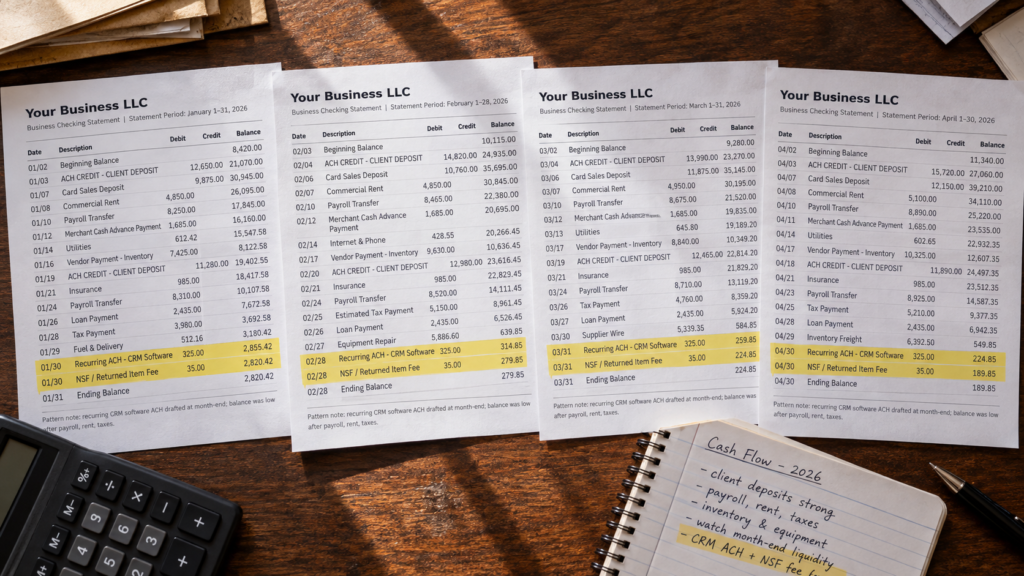
Your financial habits tell a story long before you apply for small business funding. Every payment, overdraft, deposit, credit card balance, and late payment becomes part of the history a lender will eventually review. You know what was happening when each event occurred. As the owner, you know of the customer who paid late, the unexpected operations expenses, and the seasonality of your business when sales are generally slow. When you apply for funding, the lender will review the documents of these moments left behind.
I return often to a simple thought: you are whatever you repeat.
That has stayed with me because I have seen the same financial issue happen often enough that it eventually affected a lending decision. I have advocated for clients in conversations with underwriters and watched a credit problem become harder to explain because it had happened several times. I have seen the same thing with repeated non-sufficient funds (NSF) transactions. There may be a perfectly understandable reason for something happening once. When it keeps happening, the lender has to ask whether it is likely to happen again.
TL;DR
When you apply for business funding, lenders look at how you’ve been managing your money, including your cash flow, credit, payments and existing debt. You know the circumstances behind a difficult month or an overdraft, but when the same issues keep showing up, a lender may wonder whether they will happen again. Before urgency pushes you to apply, take a clear look at what a lender will see so you can know where you stand before you apply.
The Story Your Financial History Tells
When you look at your financial history, you know why certain things happened. A large customer may have paid two weeks late and several bills came out before the money arrived. A piece of equipment could have broken down unexpectedly, forcing you to move money around to pay for the repair. Or sales slowed for a few months, and you used credit cards or delayed a payment to get through that period.
There is usually a story behind the numbers.
A lender won’t automatically know your story when reviewing your application. The lender sees what shows up in your bank statements, credit history and other financial documents. You may have an opportunity to explain what happened, and sometimes that explanation helps. When the same issue keeps showing up, the lender may wonder whether it could happen again.
If your account was overdrawn, you remember why. If several overdrafts appear on your bank statements, the lender may question whether the business usually has enough money available to pay its bills. Repeated late payments, high credit card balances or numbers that don’t match across your tax returns, financial statements and other paperwork can raise questions too.
You lived through what happened. The lender sees what shows up in the paperwork when you apply.
What Do Lenders Look for Before Approving a Business Loan?
Every lender and loan program has its own requirements, so the details of each small business loan requirement will vary. One of the basic questions a lender needs to answer is whether the business appears able to make the payments on the money it wants to borrow. The lender will look at the money coming into the business, the expenses going out, your exisitng debts and the credit history of the business and its owners.
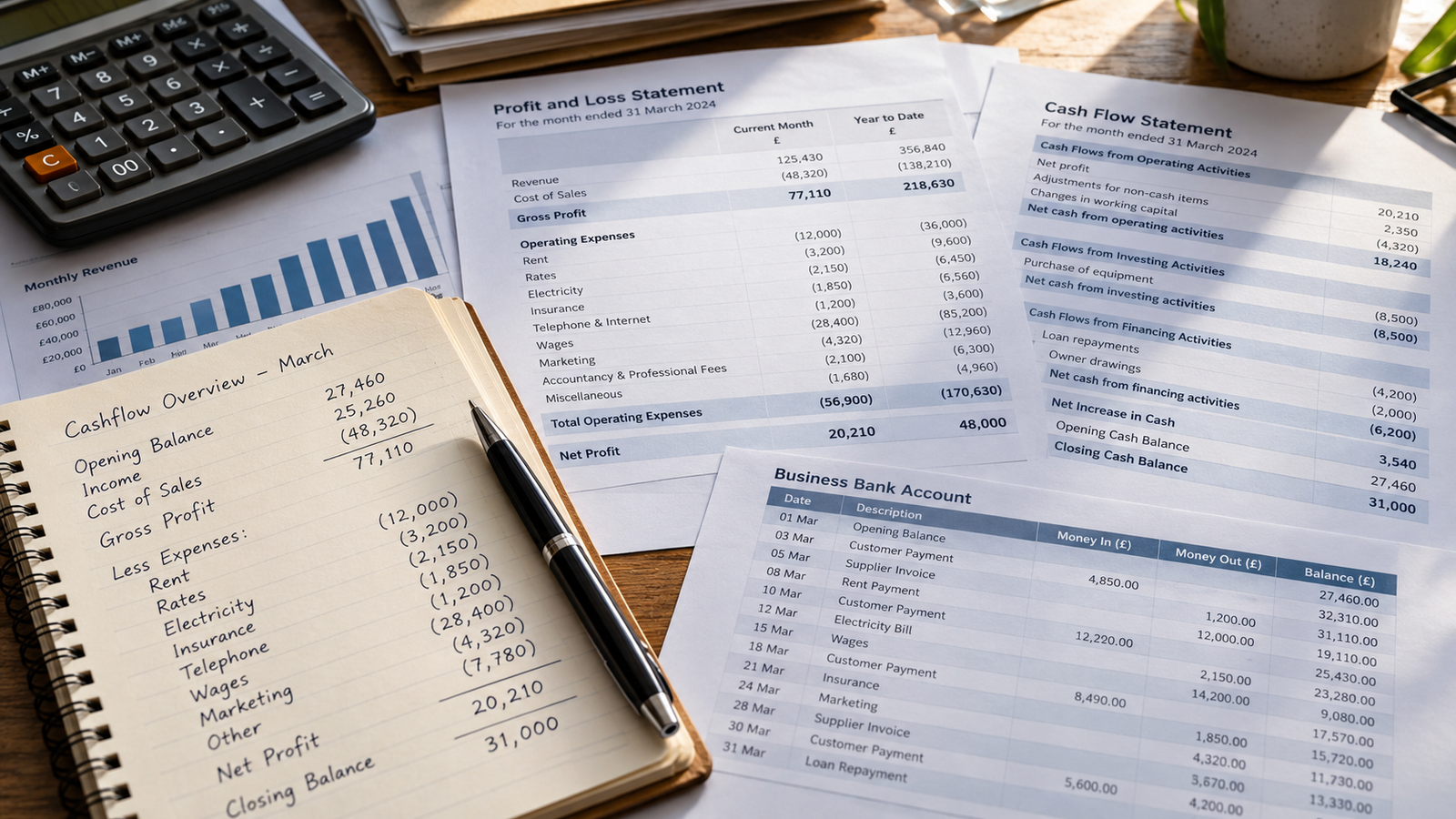
Cash flow matters because strong sales do not always leave enough money to take on another payment. Your business could bring in $50,000 in a month, then use most of that money for payroll, rent, inventory, credit cards, existing loans and the everyday costs of running the business. A lender wants to know how much is left because that is where the new loan payment will come from.. The lender needs to understand what is available after those expenses because the new loan payment has to come from somewhere.
Your credit history gives the lender another view of how you have handled money you already borrowed. They may see your payment history, balances and previous credit problems when reviewing the request. This is also why checking your personal and business credit reports before applying is important. If something is being reported incorrectly, you want to know about it before it becomes part of a lending decision.
Your financial documents also need to make sense when they are looked at together. If your financial statements show one picture of the business and other records seem to show something different, the lender may need more information before making a decision. The amount you are asking to borrow matters too. You should be able to explain how much you need, what you plan to do with the money and how the business will afford the payment that comes with it.
Why Timing Matters Before You Apply for Business Funding
Most small business owners do not start looking for funding for no reason. Something usually happened that made the money necessary. You may have an opportunity to expand, need to replace equipment, have a large order that requires more inventory or win a contract that requires you to hire people before the first customer payment arrives. Sometimes the reason is more immediate: cash is tight and you need money to keep things moving.
That is usually when the pressure to apply begins.
When you need the money, it is easy to focus on finding a lender and getting the application submitted. The financial history that the lender will review already exists and is recorded in that moment. If you have not looked closely at your credit, bank activity, cash flow and financial records, from the lender’s perspective, the first person to point out a problem could be the lender after reviewing your application.
A lender may ask for an explanation or additional documents when something raises a question. The issue can also affect the lending decision itself. Understanding what is already showing up in your financial history gives you the opportunity to know what a lender is likely to see before you decide that now is the right time to apply.
Sometimes waiting is a financial decision.
Look at Your Business Before the Lender Does
Before applying for business funding, pull up the same documents a lender will eventually ask for you to provide. What is actually there? Go through your bank statements and pay attention to overdrafts and months when the balance repeatedly became very low. Review your payment history and check your personal and business credit report,is everything accurate? Review your financial statements and make sure they are current and that you understand the numbers they show.
Think about how much you want to borrow and ask yourself whether you can explain exactly what you will do with the money and where the money for the new monthly payment will come from. If your business is already struggling to cover its current expenses, you need to recognize that before assuming another monthly payment will solve the problem.
You are looking for the things you would rather find yourself than have a lender find first.
You may be able to explain some issues easily, while others could take time to correct. Something you were worried about might also turn out to be less of a problem than you thought. The important thing is that you know what is there before making a decision about applying.
Financial history also changes with time. A period of overdrafts eventually becomes an older part of the history.You can pay down debt, correct errors on your credit report and update your financial statements. The business may have several stronger months of cash flow after a difficult period. What a lender sees depends in part on when you decide to place the application in front of them.
Know What a Lender Will See When You Apply
You know why the overdraft happened, and the reason the account balance dropped below average that month. Only you know why you relied on a credit card to cover expenses or why a payment was late. You lived through whatever was happening in your business at the time.
Now look at all of those events together.
If you applied for funding today, what would someone who does not know the story behind every number see? Would your records show that the business can handle another payment? Are there problems you already know need attention? Is something sitting in your credit or financial records that you have not looked at in months?
Those are questions worth answering before you hand the decision to a lender.